Germinating Lavender Seeds In The Fridge
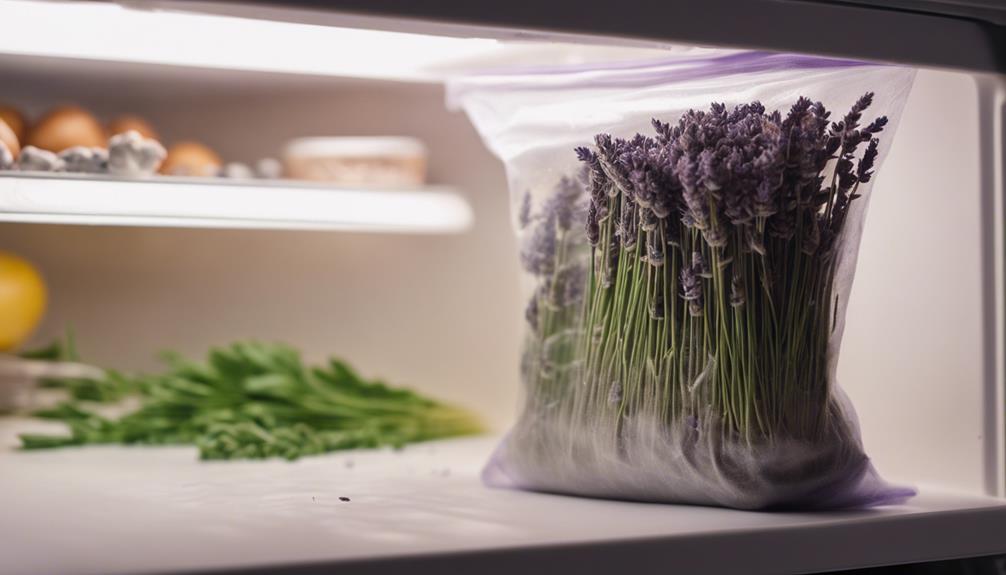
To germinate lavender seeds in the fridge, initiate cold stratification to break seed dormancy.
Briefly moisten the seeds, then place them in a plastic bag with a damp paper towel, ensuring the towel remains damp but not soggy.
Refrigerate at 35-45°F (2-7°C) for 4-6 weeks, regularly checking the moisture level.
After the stratification period, plant the seeds in a well-drained seed starter mix, covering them lightly to allow for light exposure necessary for germination.
Maintain consistent moisture and adequate light for successful sprouting.
Key Takeaways
To germinate lavender seeds, follow these steps:
Moisten the seeds and place them in a plastic bag with a damp paper towel. Refrigerate at a consistent temperature of 35-45°F (2-7°C) for 4-6 weeks to induce cold stratification.
Regularly check the moisture level to ensure the paper towel remains damp but not soggy.
After 4-6 weeks, transfer the seeds to a seed tray filled with well-drained soil mix. Cover with plastic wrap to maintain humidity.
Move the tray to a warm, sunny location (around 65-75°F or 18-24°C) for germination, which typically occurs within 30-40 days of stratification.
Benefits of Cold Stratification
Benefits of Cold Stratification
Cold stratification is a crucial process that mimics the natural winter conditions necessary for lavender seeds to break dormancy and germinate. By exposing the seeds to a cold, moist environment, you're simulating the natural winter period, signaling to the seeds that it's time to grow.
To cold stratify lavender seeds, place them in a damp medium, such as a paper towel or a small container filled with moist sand or peat moss, and store them in the refrigerator for 4 to 6 weeks. This process helps break seed dormancy, a natural mechanism that prevents seeds from germinating during unsuitable conditions.
Cold stratification significantly increases the germination success rate of lavender seeds. Without this step, seeds may remain dormant and fail to sprout, regardless of subsequent care. This is particularly important for those aiming to grow lavender from seed or produce aromatic lavender products, as it ensures a higher yield.
Properly cold stratifying lavender seeds is a simple yet effective way to guarantee strong and healthy plant growth. By preparing the seeds correctly, you're setting yourself up for success and supporting your goal of utilizing lavender for its beauty and utility.
Choosing the Right Seeds
Selecting high-quality lavender seeds is crucial for promoting healthy plant growth and successful germination. It's essential to purchase seeds from a reputable supplier to ensure they've good germination rates and disease resistance. English lavender seeds are a popular choice among home gardeners due to their reliability and diverse variety offerings.
When choosing seeds, consider the purpose and type of lavender you want to grow. English lavender seeds are ideal for seed starting, offering a cost-effective way to cultivate a diverse garden. Unlike Lavandin hybrids, which require propagation by cuttings, English lavender seeds can produce beautiful and aromatic plants from scratch.
During the seed starting process, pay attention to the number of seeds per cell. Typically, planting two to three seeds per cell can increase the likelihood of successful germination. This method ensures that at least one seed per cell will germinate, considering that not all seeds have a perfect germination rate. Proper spacing also helps prevent overcrowding, which can lead to poor growth and increased susceptibility to diseases.
Proper storage of lavender seeds is also vital. Keep them in a cool, dry place to maintain their viability. Lavender seeds can remain dormant for up to two years when stored correctly, providing flexibility in your planting schedule.
Preparing Lavender Seeds
To successfully germinate lavender seeds, cold stratification is essential. This process mimics the natural overwintering process, ensuring the seeds are ready for ideal germination.
Moisten the seeds briefly, then place them in a plastic bag with a damp paper towel or coffee filter, providing the necessary moisture and cold conditions that mimic winter. Seal the bag and refrigerate for 4-6 weeks, maintaining a consistent temperature between 35-40°F (1-4°C). This cold environment breaks the seeds' dormancy, vital for successful germination.
Periodically check the moisture level, ensuring the paper towel or coffee filter remains damp but not soggy. Excessive moisture can cause mold growth, while insufficient moisture can dry out the seeds, hindering germination.
After the stratification period, the seeds are ready for planting. Place them in small pots filled with well-draining soil, and consider using a heat mat to aid germination, maintaining a soil temperature between 55-65°F (13-18°C). Be patient, as lavender seeds can take up to a month to germinate.
The Paper Towel Method
The paper towel method is a simplified approach to germinating lavender seeds, providing a controlled environment for cold stratification.
To begin, you'll need a moist paper towel and a plastic or ziplock bag. Place the lavender seeds on the moist paper towel, ensuring they're evenly spaced out. Fold the paper towel to cover the seeds, then place it inside the plastic bag. Seal the bag and refrigerate it for 30-40 days, simulating winter conditions essential for seed germination.
Maintain consistent moisture levels during the stratification period by regularly checking the paper towel's moisture level. Dryness can prevent germination, so occasionally spritz the towel with water to maintain its moisture levels.
After the cold stratification period, move the seeds to a warm, sunny location. Remove the paper towel from the refrigerator, leaving the seeds on it. Place the towel in a spot with ample sunlight and warmth to encourage germination, which can take 1-2 weeks or longer. Ensure the paper towel remains moist during this time.
The paper towel method offers the advantage of easy monitoring, allowing you to observe the seeds as they germinate and avoiding overwatering, which can be detrimental to delicate seedlings.
Once the lavender seeds have germinated, transfer the seedlings to a well-draining seed starter mix. Provide adequate light and water to promote healthy growth, ensuring your lavender plants develop strong and vibrant.
Using a Seed Tray
Using a seed tray for germinating lavender seeds involves creating an ideal environment for cold stratification and subsequent growth.
Fill the seed tray with a well-drained seed starter mix, providing necessary aeration and drainage for healthy seed development. Moisten the soil mix with water until it's evenly damp but not waterlogged.
Place one or two lavender seeds about 1/8 inch deep in each cell of the tray. Cover the tray with a clear plastic dome or plastic wrap to maintain humidity, creating a micro-environment that supports germination.
Place the covered tray in the refrigerator at a temperature of 35-45°F (2-7°C) for 30-40 days, mimicking natural winter conditions essential for breaking seed dormancy.
After cold stratification, move the seed tray to a warm location with indirect light, such as a sunny windowsill or under grow lights. Maintain consistently moist soil, avoiding overwatering, as lavender seeds thrive in well-drained soil. Keep the soil temperature around 65-75°F (18-24°C) to promote germination, which can take 1-2 weeks or longer, depending on the lavender variety and seed quality.
Once seedlings emerge, provide bright, indirect light. Gradually acclimate them to outdoor conditions before transplanting into individual pots or directly into the garden, ensuring a robust and healthy growth.
Optimal Soil Mix
Creating the ideal soil mix for lavender involves combining ingredients that facilitate excellent drainage and proper aeration. Lavender plants thrive in well-draining conditions, preventing waterlogging and root rot.
A cost-effective recipe for optimal soil mix is: 1 part perlite 1 part sand 1 part potting soil (compost optional)
Perlite and sand improve drainage, allowing excess water to flow away from the roots, reducing the risk of root rot. These ingredients are easily accessible at home improvement stores, making this mix practical and accessible. When mixed with potting soil, they create a balanced medium that supports healthy root growth and proper aeration.
The optional addition of compost enhances the soil's nutrient content and structure, providing a richer environment for lavender seedlings. However, the mix of perlite, sand, and potting soil is sufficient for growing strong, healthy lavender plants.
Lavender prefers a pH-neutral to slightly alkaline soil mix. To adjust the pH level, consider adding crushed eggshells, which gradually increase the soil's alkalinity, creating a more favorable environment for lavender. Crush the eggshells finely to mix well with the soil.
Sowing Lavender Seeds
To successfully germinate lavender seeds, start by cold stratifying them in a plastic bag with a moist paper towel in the refrigerator for 30-40 days. This process mimics the natural winter conditions required for germination.
After cold stratification, prepare a seed starting mix specifically designed for lavender and other herbs. This type of mix improves germination rates and reduces the risk of overwatering, which can harm delicate seedlings.
Sow the seeds shallowly on the soil surface, as lavender seeds require light to germinate. Cover them with a thin layer of soil or perlite to prevent washing away during watering. Maintain a consistent moisture level, but avoid overwatering, which can lead to rot.
To ensure a good number of seedlings, sow multiple seeds per cell or pot. This increases the likelihood of at least one seedling surviving and thriving, especially when germination rates are uncertain. Once the seedlings have sprouted, thin them out to 1-2 plants per cell or pot, selecting the strongest ones to continue growing.
Begin sowing lavender seeds indoors 10-12 weeks before the last frost. This head start on the growing season gives lavender plants the best chance to establish themselves and flourish. By following these steps, you can provide your lavender seeds with the optimal conditions needed for successful germination and growth.
Ensuring Proper Light
Ensuring your lavender seedlings receive adequate light is crucial for their healthy growth and development. Lavender requires plenty of light to thrive, and without it, seedlings can become weak and spindly, making them more susceptible to disease and pests.
For optimal growth, provide direct sunlight for 4-6 hours a day through a south-facing window. If this isn't possible, use LED grow lights with a color temperature of 5000-6500K, which mimics natural daylight and provides the necessary spectrum for seedlings.
To ensure success, follow these guidelines:
Maintain a consistent light schedule of 12-14 hours of light per day to regulate growth and development. Regularly monitor seedlings, and if they appear leggy or pale, adjust their light exposure accordingly.
When using LED grow lights, position them 2-4 inches above the seedlings and adjust the height as they grow to maintain the perfect distance and prevent overheating.
Proper lighting is vital to prevent legginess and promote strong, healthy growth. By adhering to a consistent light schedule and using appropriate lighting methods, you can create an environment where your lavender seedlings can flourish.
Watering Techniques
To facilitate successful germination of lavender seeds, proper watering techniques are crucial. Utilize room-temperature water to prevent shocking the seeds and create a conducive environment. Water gently but thoroughly to settle the soil and provide adequate moisture for sprouting.
Watering once a week is typically sufficient, but daily soil monitoring is necessary to avoid overwatering. Check the top inch of soil; if it feels dry, it's time to water again. Overwatering can lead to root rot or damping off, detrimental to seed health.
In the initial germination stages, use a spray bottle to maintain humidity and gently water the seeds without washing them away. Spray the soil, avoiding direct contact with the seeds, which can cause rot and hinder germination.
Carefully monitor soil moisture, as lavender seeds are susceptible to damping off in overly wet soil. Adjust your watering schedule according to soil moisture levels to provide ideal germination conditions.
Post-Stratification Care
After stratification, transfer lavender seeds to a warm, sunny location with consistent soil moisture, ensuring a moist but not waterlogged surface. Provide adequate light and maintain room temperature to facilitate effective germination.
As seeds germinate, tiny seedlings will emerge. At this stage, ensure:
• Bright light: Provide direct sunlight or use grow lights to prevent leggy growth. • Cool temperatures: Maintain a slightly cooler room temperature to promote sturdy growth. • Consistent moisture: Water carefully to avoid drying out or overwatering, as seedlings are sensitive to excess water.
As seedlings grow, they'll require more space. Transplant them into larger pots once they've developed a couple of sets of true leaves, allowing their roots to expand and promoting healthier plants. Handle delicate roots and stems gently during transplanting to avoid damage.
Before transplanting seedlings outdoors, harden them off by gradually exposing them to outside conditions over a week or two. Start with a few hours in a sheltered spot, then gradually increase their time outdoors. This process strengthens the seedlings, preparing them for the garden.
To ensure a sufficient number of healthy plants, cultivate more seedlings than needed. This allows for extras to share and guarantees a successful garden. By following these steps, you'll be well on your way to growing beautiful, fragrant lavender plants.
Frequently Asked Questions
How to Quickly Germinate Lavender Seeds?
To quickly germinate lavender seeds, use seed trays and maintain consistent soil moisture. Provide 12-14 hours of light and keep temperatures steady around 65°F, avoiding fluctuations to promote healthy growth.
Should I Put Seeds in the Fridge to Germinate?
No, you should not put seeds in the fridge to germinate. In fact, refrigeration can hinder seed germination. Instead, seeds typically require a warm and moist environment to germinate. The ideal temperature and moisture levels vary depending on the specific seed type, so research the specific needs of your seeds to ensure optimal germination.
Should You Cold Stratify Lavender Seeds?
Cold stratification is a necessary step for lavender seeds, as it breaks seed dormancy and significantly enhances germination success. By understanding the benefits of stratification, you can promote healthy growth and ultimately cultivate thriving lavender plants.
Why Won't My Lavender Seeds Germinate?
Lavender seeds may fail to germinate due to various factors, including poor soil quality, inconsistent watering, insufficient light exposure, or low seed viability. To promote successful germination, ensure optimal growing conditions and use fresh, high-quality seeds.
Conclusion
Germinating lavender seeds in the fridge is a crucial step in their growth process.
Cold stratification awakens their potential, similar to an athlete's training for a marathon.
To achieve successful germination, it's essential to start with high-quality seeds and use techniques like the paper towel method.
After stratification, provide the seeds with adequate light and water to promote healthy growth.
With proper post-stratification care, your lavender will thrive, ultimately leading to a flourishing and aromatic garden.