Lavender Growing Conditions
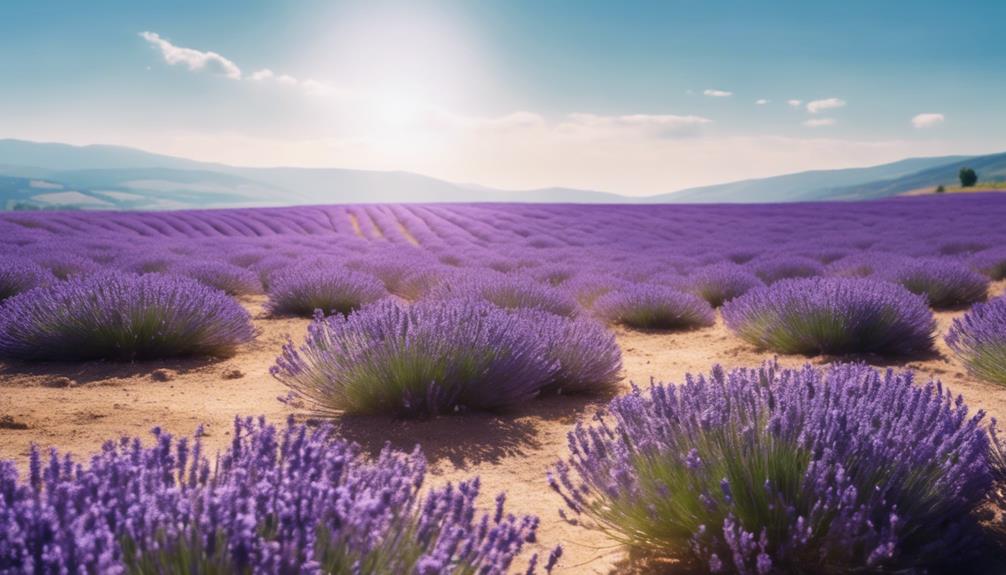
To grow healthy lavender, ensure it receives at least 6 hours of direct sunlight daily.
Use well-draining soil with a pH between 6.7 and 7.3, incorporating sand or gravel to enhance drainage.
Plant lavender in full sun, spacing plants 1-3 feet apart, and water in the morning to prevent overnight moisture retention.
Water young plants frequently, reducing watering once established.
Prune in early spring and mulch in late fall to maintain plant health.
In colder zones, plant after the frost risk has passed.
Key Takeaways
Lavender Growing Conditions:
To thrive, lavender requires at least 6 hours of direct sunlight daily, with afternoon shade in hot regions. The ideal soil should be well-draining and have a neutral to slightly alkaline pH level, ranging from 6.7 to 7.3. Plant lavender in spring or early fall, spacing plants 1-3 feet apart. Young plants need frequent watering, but established lavender becomes drought-tolerant and requires less frequent watering. Prune in early spring and mulch in late fall to protect roots from winter conditions.
Optimal Light Requirements
Lavender requires full sun to thrive, necessitating at least 6 hours of direct sunlight daily. Insufficient light can cause lavender to become leggy, leading to weak and tall growth.
In regions with intense sunlight, providing afternoon shade can prevent scorching leaves. This balance ensures the plant remains vibrant and productive.
In areas with extremely strong sunlight, positioning lavender to receive morning sun and relief during the hottest part of the day can help prevent damage. Afternoon shade is crucial in such cases.
When growing lavender indoors, place it in a south-facing window to guarantee 4-6 hours of direct sunlight. If the indoor space lacks sufficient light, supplement with a grow light.
Lavender grown in partial shade will produce fewer flowers and may not be as robust, especially if it receives less than the minimum required sunlight. Understanding these light requirements is essential for optimal lavender growth and flower production.
Soil and Ph Levels
To cultivate thriving lavender plants, verify that the soil has a neutral to slightly alkaline pH level, ranging from 6.7 to 7.3.
Lavender doesn't perform well in acidic soil, so test the pH level using a home testing kit available at garden centers.
Well-draining soil is crucial to prevent waterlogged conditions that can lead to root rot.
If your garden soil retains water, mix in sand or gravel to improve drainage. Lavender doesn't tolerate heavy clay soils, which hold excessive moisture.
Amending heavy clay soil with organic matter can help, but growing lavender in containers might be a better option.
When using containers, select a quality potting mix that drains well.
Mixing in perlite or small pebbles can enhance drainage. Containers provide better control over soil conditions, which is particularly useful when dealing with less-than-ideal garden soil.
Planting Guidelines
After ensuring ideal soil conditions, focus on the following guidelines to give your lavender the best start:
Optimal Planting Conditions Lavender requires full sun and well-drained soil. In hotter climates, provide afternoon shade to prevent scorching.
Planting Schedule Plant lavender in spring or early fall, depending on your zone. In colder regions, plant in spring, while warmer zones benefit from early fall planting.
Spacing and Planting Space plants 1 to 3 feet apart to provide sufficient room for growth. Ensure the top of the root ball is level with the soil line.
Planting Technique Prepare a hole twice as deep and wide as the root ball, allowing roots to spread and establish easily. Place the plant in the hole, water to compress soil and remove air pockets. Only water if the plant and conditions are extremely dry, as lavender prefers drier soils.
Starting with Healthy Plants Begin with plants that have developed root systems. If direct sowing seeds, ensure they've been hardened off to handle outdoor conditions.
Winter Care In colder regions, mulch plants in late fall to protect them from frost. Mulching helps maintain soil temperature and moisture, providing a buffer against extreme weather.
Watering Practices
Proper Watering Techniques for Lavender Plants
To ensure the optimal growth of lavender plants, it's essential to adopt the right watering practices.
Watering in the morning helps prevent moisture from lingering on the leaves overnight, reducing the risk of root rot and other diseases.
During the first year, young lavender plants require frequent watering, every few days, to establish a strong root system.
However, once established, lavender plants become drought-tolerant and require less frequent watering.
Overwatering can be detrimental, leading to root rot. It's crucial to wait until the top 2 inches of soil are dry before watering established plants again.
Potted lavender plants have different watering needs.
Due to the soil in pots drying out quickly, potted lavender requires more frequent watering.
Regularly check the soil moisture and water as needed to maintain slightly damp but not soggy soil.
Seasonal Care Tips
Seasonal care tips are essential for lavender plants to thrive throughout the year, adapting to different climates and conditions.
By paying attention to the seasonal needs of your lavender plants, you can ensure they grow healthy and produce abundant flowers.
Spring: In colder zones, plant lavender after the frost risk has passed, allowing the plants to establish roots without the threat of freezing temperatures.
Early spring is also the ideal time for pruning, which encourages new growth and maintains the plant's shape.
Trim about one-third of the plant, cutting just above a set of leaves.
Summer: Early summer is the perfect time for propagating new plants.
Divide and replant using the layering method or take cuttings to maintain the size and shape of your lavender while creating more plants for your garden.
Space the plants 12 to 18 inches apart to promote good air circulation and prevent disease.
Fall: In warmer zones, plant lavender in early fall to give it time to establish before winter.
Mulching in late fall is crucial for colder regions, as a layer of mulch around your lavender plants protects the roots from harsh winter conditions, enabling them to survive and thrive.
Winter: Monitor your lavender for signs of pests or diseases during winter.
Deadhead unwanted seedlings to prevent self-sowing.
Proper spacing ensures good air circulation, keeping your lavender healthy.
Frequently Asked Questions
Where Does Lavender Grow Best?
Lavender grows optimally in well-drained soil with a pH level between 6.7 and 7.3, receiving full sunlight and moderate watering. It thrives in climate zones 5a-9a. For best results, plant in spring or fall, and apply mulch to retain moisture and regulate soil temperature.
Why Is Lavender Hard to Grow?
Lavender is challenging to cultivate due to its specific requirements, including well-draining soil, precise watering, full sun exposure, and a narrow pH range. Additionally, it is sensitive to frost, prone to root rot if the soil is too moist, and requires adequate air circulation, proper plant spacing, and regular pruning to prevent pest issues.
Does Lavender Come Back Every Year?
Lavender can be a perennial herb, meaning it can come back every year if properly cared for. To ensure its return, provide winter protection, use mulching techniques, and practice proper pruning. Additionally, maintain a suitable watering schedule, optimal soil pH, and appropriate fertilizer types. Consider implementing pest control measures, timely harvesting, container gardening, and strategic companion planting to create a conducive environment for lavender's annual return.
Does Lavender Spread Quickly?
Lavender does not spread aggressively, making it a manageable addition to gardens. Its root system, which reaches 12-18 inches deep, responds well to proper seed spacing, soil drainage, and foliage density, allowing for controlled growth. Regular pruning, mulching, and strategic companion planting also help maintain pest control and overall garden health.
Conclusion
To ensure optimal growth, lavender requires specific conditions.
Provide full sun to partial shade, ideally 6 hours of direct sunlight.
Plant in well-draining soil with a pH between 6.0 and 7.0.
Water sparingly, avoiding overwatering, especially during dry spells.
Attend to seasonal needs, such as pruning and fertilizing.
With consistent care and attention to detail, lavender will thrive, producing vibrant blooms and fragrances.