How to Grow Lavender From Seed Indoors
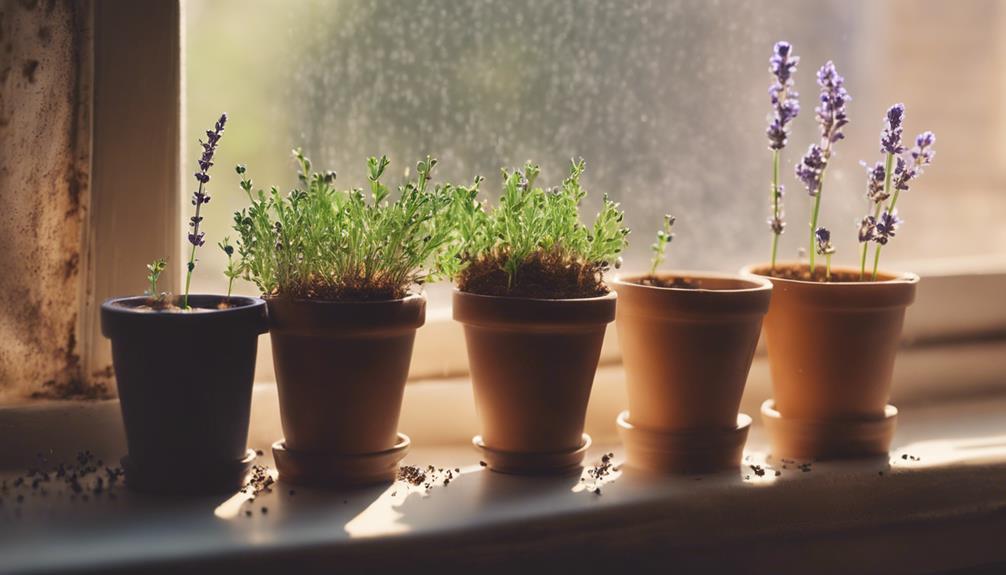
To successfully grow lavender from seed indoors, begin by acquiring high-quality seeds and preparing a seed tray with a well-draining soil mix.
Initiate the process 10-12 weeks prior to the last frost. Sow the seeds shallowly, maintaining a soil temperature above 60°F (15°C).
Utilize grow lights to provide 12-14 hours of light daily. Maintain humidity by misting the soil, taking care to avoid overwatering.
Once seedlings develop two sets of true leaves, commence the hardening-off process by gradually exposing them to outdoor conditions.
After the danger of frost passes, transplant the seedlings into well-draining soil with full sun.
Key Takeaways
To successfully grow lavender from seed indoors, follow these steps:
- Begin by starting lavender seeds indoors 10-12 weeks before the last frost date in your area.
- Use high-quality seeds and a well-draining soil mix to promote optimal germination.
- Cold stratify the seeds before planting to improve germination rates. This process involves placing the seeds in a moist paper towel, then refrigerating them for 30-60 days.
- Maintain a soil temperature above 60°F (15°C) and provide 12-14 hours of light daily to encourage healthy growth.
- Water carefully to avoid overwatering, instead misting the soil lightly to maintain consistent humidity.
By following these steps, you can increase your chances of successfully growing lavender from seed indoors.
Supplies Needed
To grow lavender from seed indoors, you'll need the following essential supplies: high-quality lavender seeds from a reputable seed company, a seed tray or recycled plastic containers, plant tags for labeling, a well-drained soil mix, peat moss (optional), a heating pad (optional), grow lights, and a watering system.
Begin by procuring high-quality lavender seeds and a seed tray or recycled plastic containers. Label each container with plant tags to keep track of your seedlings. Use a high-quality seed starting mix, and consider adding peat moss to improve soil drainage and aeration. Fill each cell or container about three-quarters full with the soil mix.
Lavender seeds require consistent warmth to germinate, so consider using a heating pad to maintain a steady temperature. Position the heating pad under the seed tray to promote quicker germination.
Provide sufficient light for your seedlings by positioning grow lights above the seed tray, mimicking natural sunlight. This helps your seedlings develop strong and healthy. Keep the lights on for about 12-16 hours per day to support healthy growth.
Water the seeds lightly and prevent the soil mix from becoming waterlogged. Keeping a close eye on moisture levels will prevent seed rot and promote healthy seedling development.
Seed Selection
Selecting the right variety of lavender seeds is crucial for a thriving and vibrant indoor garden. English lavender is a popular choice due to its fragrance and ease of growth. Its seeds germinate well indoors, especially when started in late winter.
When choosing seeds, opt for fresh seeds from a reputable source to ensure a higher germination rate. Before planting, cold stratify the seeds by placing them in a refrigerator for a few weeks to mimic natural winter conditions. This step is essential for lavender seeds to germinate.
Use a high-quality, well-draining potting mix to plant your seeds, as lavender plants thrive in soil with good drainage. This prevents water from pooling around the roots, which are susceptible to rot if too wet.
Consider the pot's size and material when planting. Smaller pots are easier to manage indoors, but ensure they've drainage holes to avoid waterlogging. By selecting the right seeds and preparing them properly, you set the stage for a successful indoor lavender garden.
Proper seed selection and preparation enable these lovely plants to germinate and grow strong, allowing you to share their beauty and fragrance with others.
Sowing Seeds
When sowing lavender seeds, start them indoors 10-12 weeks before the last frost to allow ample time for germination and establishment.
Prepare a seedling tray with good drainage and fill it with a well-draining mix of coconut coir and commercial potting soil, promoting healthy germination and preventing waterlogging.
Sow the seeds shallowly on the soil surface, as they require light exposure to germinate. Gently press two to three seeds per cell onto the surface to increase the chances of successful germination.
Maintain a consistent soil temperature above 60°F, using a seed starting mat if necessary. Provide adequate light, supplementing with grow lights if natural light is limited. Position the lights a few inches above the tray, keeping them on for 14-16 hours daily.
Maintain a humid environment by misting the soil lightly each day.
Once the seedlings reach 2 inches tall, they're ready for transplanting. Move them to larger pots with a well-draining soil mix that includes perlite to prevent waterlogged conditions.
Germination Conditions
Maintaining ideal germination conditions is crucial for successfully growing lavender from seeds. Lavender seeds require a combination of light, warmth, and cold stratification to germinate properly.
Start by providing cold stratification, which involves placing the seeds in a refrigerator for a few weeks to simulate winter conditions. This step is essential, as it helps break seed dormancy and promotes germination.
For indoor sowing, use cell trays filled with well-drained soil. The soil temperature should be above 60°F, with an ideal range of around 70°F. Consistent warmth is necessary, so consider using a seedling heat mat to maintain the right soil temperature.
Lavender seeds need light exposure to sprout successfully. Place the trays in a sunny spot or use grow lights to provide at least 12-14 hours of light daily. Maintain proper humidity levels by misting the soil lightly each day, avoiding overwatering that can cause the seeds to rot.
Key germination conditions are summarized in the following table:
| Condition | Requirements |
|---|---|
| Cold Stratification | Refrigerate seeds for a few weeks |
| Soil Temperature | Maintain above 60°F, ideally 70°F |
| Light Exposure | 12-14 hours of sunlight or grow lights |
Germination typically takes 15 to 20 days. Be patient and monitor the conditions consistently. Providing the right combination of light, warmth, and humidity gives lavender seeds the best chance of germinating and growing into healthy plants. Attention to detail and consistency are key to serving plants well and achieving successful germination.
Hardening Off
Hardening Off
After successfully germinating your lavender seeds, the next crucial step is to harden off the seedlings to prepare them for outdoor planting. This process acclimates your lavender seedlings to outdoor conditions, preventing shock and promoting healthy growth.
To begin hardening off, place your seedlings in a shaded area outside for 1-2 hours daily. Over the next 7-10 days, gradually increase their exposure to direct sunlight and wind. This gradual introduction helps them adjust to the differing light levels and wind exposure they'll encounter outside.
Be cautious of sudden changes in temperature or humidity during this period, as these can cause unnecessary stress. Monitor your lavender seedlings closely for signs of stress during the hardening-off process. Look out for wilting, yellowing, or other indications that your plants are struggling to adapt.
If you notice these signs, temporarily reduce their time outdoors and ensure they aren't exposed to extreme conditions too quickly. Adjust the hardening-off schedule as needed to minimize stress and support healthy growth.
Maintaining consistent soil moisture is vital during hardening off. Keep the soil consistently moist but not waterlogged to prevent root rot and other issues. Strike a balance, ensuring your seedlings have enough water without oversaturating the soil.
Transplanting Seedlings
Transplant your lavender seedlings when they've at least two sets of true leaves and the danger of frost has passed. Harden off your seedlings by gradually exposing them to outdoor conditions over a week, helping them adapt to changes in temperature, sunlight, and wind.
Choose a spot with full sun, as lavender thrives in bright conditions. Ensure the soil is well-draining, sandy, and slightly alkaline (pH around 6.5). If your garden soil doesn't meet these requirements, amend it or use terracotta pots, which provide excellent drainage and root aeration.
Plant seedlings 12 inches apart to give them room to grow.
Dig a hole just deep enough to accommodate the root ball. Gently place the seedling in the hole, cover the roots with soil, and press slightly to eliminate air pockets. Water thoroughly to help the seedlings settle in.
Initially, water them 1-2 times a week, reducing to every 2-3 weeks once established. Avoid overwatering, which can lead to root rot.
Frequently Asked Questions
How Long Does It Take for Lavender to Grow From Seed Indoors?
Lavender seeds typically take around 15-20 days to germinate indoors, provided optimal conditions are met. This includes maintaining a consistent soil temperature between 65-75°F (18-24°C), ensuring adequate light exposure, and stratifying the seeds. A well-balanced watering schedule and proper seedling care using a suitable potting mix and indoor climate are also crucial for successful germination.
What Is the Fastest Way to Germinate Lavender Seeds?
To quickly germinate lavender seeds, begin with 3-6 weeks of seed stratification. Then, use a well-draining soil mixture, provide adequate light, maintain a consistent temperature between 65-75°F (18-24°C), water consistently, and control humidity levels. Finally, ensure proper seedling care to promote healthy growth.
Is Lavender Hard to Grow From Seed?
Growing lavender from seed can be challenging. It requires careful attention to several factors, including seed stratification, soil pH, watering frequency, light, temperature, seedling care, fertilization, pest management, transplanting, and pruning techniques.
Can You Successfully Grow Lavender Indoors?
Growing lavender indoors can be successful if you meet its specific requirements. Provide lavender with bright, indirect light, and use well-draining soil to prevent waterlogged soil. Water consistently, but avoid overwatering. Maintain a comfortable indoor climate between 65°F to 75°F (18°C to 24°C). Choose containers with good drainage, and fertilize sparingly. Prune regularly to promote bushy growth and prevent legginess. Harvest flowers when they are in full bloom, and consider companion planting to deter pests.
Conclusion
To successfully grow lavender from seed indoors, follow these steps:
Select high-quality seeds specifically bred for indoor germination, and sow them correctly to ensure optimal growth.
Provide ideal germination conditions, including sufficient light, temperature, and moisture.
Once seedlings emerge, maintain a consistent environment to promote healthy development.
Before transplanting outdoors, harden off the seedlings to acclimate them to outdoor conditions.
With patience and proper care, you'll be rewarded with a thriving, fragrant lavender plants.